
When to get EEHA training is one of the most common questions electricians ask before moving into hazardous area work. The short answer is: earlier than most people think. Whether you are finishing your apprenticeship, eyeing a mining or oil and gas role, or realising your current EEHA is about to lapse, timing your training properly can be the difference between stepping straight into a role and watching it go to someone who planned ahead. This guide covers the key timing scenarios so you can book your EEHA course at the right point in your career, not after you have already missed an opportunity.
Before You Start Applying for Hazardous Area Roles
If you are a licensed electrician planning to move into mining, oil and gas, chemical processing or any other sector that involves classified hazardous areas, the time to complete your EEHA is before you start sending applications. Not during. Not after you get a callback.
Recruiters and site managers working across mining and heavy industry want candidates who are as close to site-ready as possible. When two electricians apply for the same role and one already holds a current EEHA Statement of Attainment, that person moves through the process faster. The [qualifications needed for mining electrical work]page covers the full credential stack, but EEHA is the piece that separates a general electrician from one who can operate in explosive atmospheres on day one.
Practically, this means booking your course four to six weeks before you plan to actively apply. That gives you time to complete the five-day program, receive your Statement of Attainment, and have it ready to attach to applications and present at inductions.

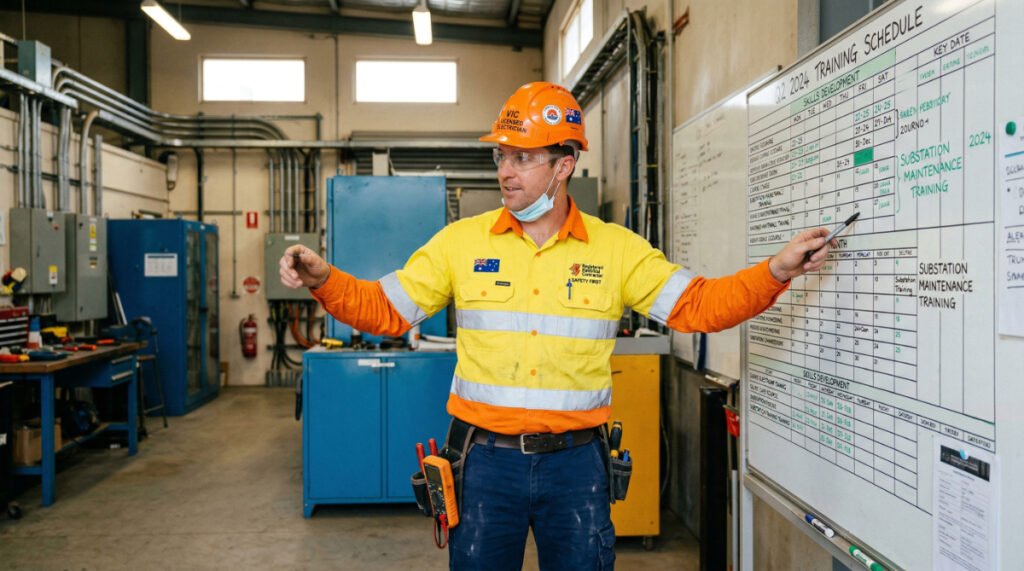
Electrician working in a hazardous area
When to Get EEHA Training as a Newly Licensed Electrician
If you have recently received your unrestricted electrical licence, EEHA training is worth considering within the first twelve months of being fully licensed. You do not need years of post-trade experience before enrolling. The entry requirement is a current unrestricted Australian electrical licence or a Certificate III in Electrotechnology Electrician.
Completing EEHA early does two things. First, it widens the range of roles you can apply for immediately. Second, it builds hazardous area competency while your foundational knowledge is still sharp from trade training. Electricians who wait several years before completing EEHA sometimes find the gap between general electrical work and hazardous area standards harder to bridge than expected.
When Your EEHA Is Approaching the Refresher Window
Industry practice under the ASNZS60079 group of standards is to complete an EEHA refresher every two to three years. If your training reaches the five-year mark without a refresher, most RTOs will require you to complete the full course again rather than the shorter refresher program, unless you have a letter from your employer stating you have continuous work within the hazardous environment.
The timing risk here is straightforward. If you let your EEHA lapse beyond five years, you lose access to the refresher pathway and face the full course cost and time commitment again. If your current training is sitting at the two to three year mark, book the refresher now. Do not wait for an employer or a recruiter to flag it.
Our Does EEHA Expire? article covers the refresher cycle and what happens when training lapses in more detail.
EEHA Training Timing at a Glance
| Your Situation | When to Book | Why It Matters |
|---|---|---|
| Applying for mining, oil and gas, or processing roles | 4-6 weeks before you start applying | Statement of Attainment in hand when recruiters ask for it |
| Newly licensed electrician | Within 12 months of receiving your licence | Widens your job options while trade knowledge is fresh |
| EEHA completed 2-3 years ago | Now | Stay on the refresher pathway before the 5-year cutoff |
| EEHA completed 4+ years ago | Immediately | Risk losing refresher eligibility and facing full course fees |
| Employer requires EEHA for a new project or contract | As soon as the requirement is confirmed | Course availability may not align with project start dates |
| Considering the Certificate IV pathway | Complete EEHA first, then gap-train to Cert IV | EEHA units count toward the full qualification |
When Your Employer Needs You Credentialed for a Project
Sometimes the timing decision is not yours. A new contract comes in, a site requires hazardous area credentials for all electrical personnel, or a compliance audit flags a gap. In these situations, the key risk is course availability. EEHA courses run on scheduled intakes, and if you need training within a tight window, seats may already be filled.
If your employer has flagged an upcoming requirement, book as soon as the need is confirmed rather than waiting for a specific start date. ROAR Training runs regular intakes from our Sunshine Coast training facility and offers online EEHA refresher options for those who already hold a current qualification.
Planning EEHA as the First Step Toward the Certificate IV
If your longer-term goal is the Certificate IV in Hazardous Areas, the timing logic is straightforward: complete EEHA first. The eight EEHA units of competency are a subset of the Certificate IV, so everything you complete in your EEHA course counts toward the full qualification. From there, you only need four additional units to achieve the UEE42622 Certificate IV.
The EEHA vs Certificate IV comparison covers this pathway in detail. The main timing consideration is to avoid letting your EEHA lapse before starting the Certificate IV gap training, as a lapsed EEHA may require you to repeat units rather than building on them.
What Happens If You Wait Too Long
Delaying EEHA training does not just mean a missed opportunity today. It has compounding effects. Roles go to candidates who already hold the credential. Refresher eligibility windows close. Employers move on to the next applicant. And if your training lapses past the five-year mark, you are looking at the full five-day course and full course fees again rather than the shorter, lower-cost refresher.
The electricians who get the most value from EEHA are the ones who treat it as a career investment with a clear timeline, not something they will get around to eventually.
Frequently Asked Questions
How far in advance should I book my EEHA course?
Book at least four to six weeks before you need the credential. This allows time to complete the five-day course, receive your Statement of Attainment, and have documentation ready for job applications or site inductions. Course intakes can fill, so earlier is better if you have a specific start date in mind.
Can I do EEHA training while still an apprentice?
No. EEHA requires a current unrestricted Australian electrical licence or a Certificate III in Electrotechnology Electrician. Apprentices who have not yet completed their trade are not eligible. Once you receive your licence, you can enrol immediately.
How long is EEHA training valid before I need a refresher?
Industry practice under AS/NZS 60079.14 is to complete a refresher every two to three years. If your training reaches five years without a refresher, most RTOs will require you to complete the full course again. Staying within the refresher window saves both time and money.
Is it worth getting EEHA if I do not have a mining job lined up yet?
Yes. Holding a current EEHA Statement of Attainment makes you a stronger candidate when opportunities come up in mining, oil and gas, chemical processing, and other hazardous area industries. Recruiters favour applicants who are already credentialed and close to site-ready.
Can I complete EEHA training online?
The full initial EEHA course includes hands-on practical assessment and is delivered over five days, either in person or through a blended format. The EEHA refresher course is available fully online and self-paced through ROAR Training. Check the course pages for current delivery options.
Should I do EEHA or go straight to the Certificate IV?
Start with EEHA. The eight EEHA units are a subset of the Certificate IV, so they count toward the full qualification. Completing EEHA first gets you site-ready faster, and you can gap-train to the Certificate IV afterward with only four additional units. Our EEHA vs Certificate IV comparison covers the differences in detail.