
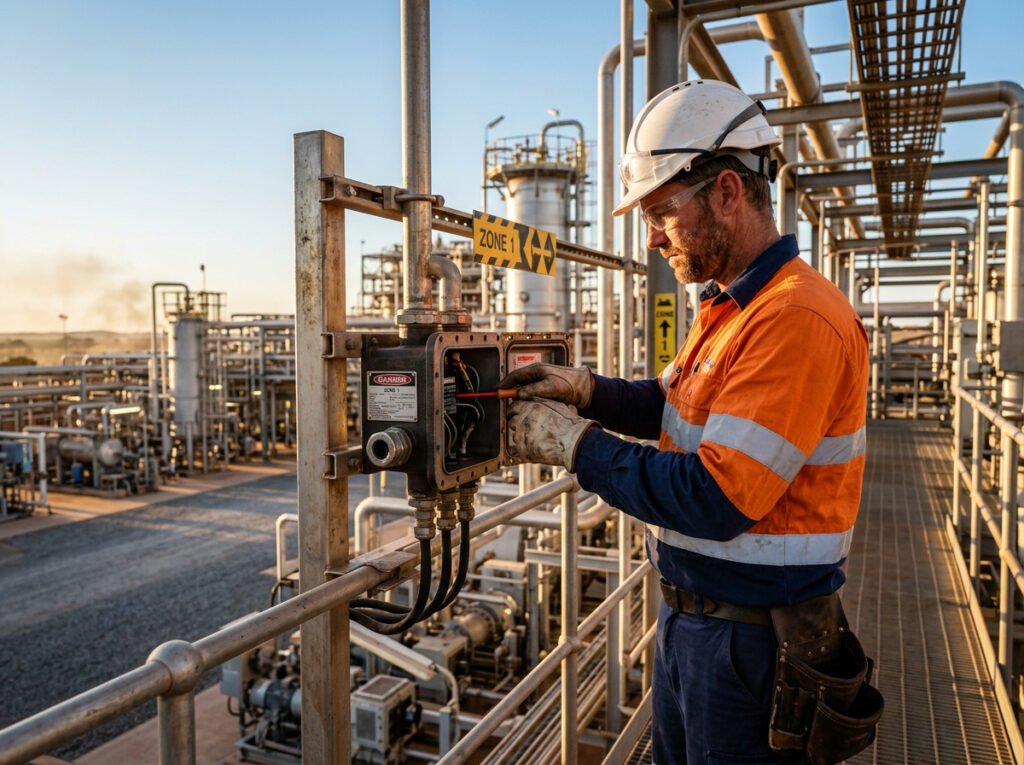
Hazardous area zone classifications are the foundation of everything you learn in EEHA training and everything you apply on site. Before you can select, install, inspect, or maintain any piece of explosion-protected equipment, you need to understand the zone system that determines what level of protection is required and where. This guide breaks down the zone classification framework used in Australia, explains what each zone means in practical terms, and covers the gas and dust classification systems that electricians encounter across mining, oil and gas, chemical processing, and manufacturing environments.
Why Zone Classifications Matter for Electrical Work
Wherever flammable gases, vapours, or combustible dusts are present in a workplace, there is a risk of explosion if those substances come into contact with an ignition source. Electrical equipment is one of the most common potential ignition sources on any industrial site. A spark from a switch, heat from an overloaded cable, or a fault in a motor can all provide enough energy to ignite an explosive atmosphere.
The zone classification system exists to manage that risk. By classifying areas according to how likely an explosive atmosphere is to be present, the system determines what type of electrical equipment can be safely installed in each location. The higher the risk, the more stringent the equipment protection requirements. For electricians, understanding zones is not optional. It is the basis for every decision you make when working with explosion-protected equipment.
Gas and Vapour Zones: Zone 0, Zone 1, and Zone 2
The AS/NZS 60079.10.1 standard classifies areas with explosive gas or vapour atmospheres into three zones. The classification is based on the frequency and duration of the explosive atmosphere being present. These are the zones you will encounter most often in industries such as oil and gas, chemical processing, refineries, and fuel storage and handling facilities.
| Zone | Definition | Practical Meaning |
|---|---|---|
| Zone 0 | An explosive gas atmosphere is present continuously, for long periods, or frequently | Inside tanks, vessels, or pipework containing flammable gas or liquid under normal operating conditions |
| Zone 1 | An explosive gas atmosphere is likely to occur in normal operation occasionally | Areas immediately surrounding Zone 0, or near equipment that may release flammable substances during routine operations such as sampling points or fill connections |
| Zone 2 | An explosive gas atmosphere is not likely in normal operation, but may occur briefly if it does | Areas surrounding Zone 1, or locations where a release would only occur due to equipment failure or abnormal conditions |
In simple terms, Zone 0 is where the hazard is always or almost always present. Zone 1 is where it is expected to show up from time to time during normal work. Zone 2 is where it should only appear if something goes wrong. The equipment you are permitted to install in each zone reflects that level of risk. Zone 0 requires the highest level of protection, and only very specific types of Ex equipment are suitable. Zone 2 allows a wider range of equipment because the hazard is less likely to be present.
Dust Zones: Zone 20, Zone 21, and Zone 22
Combustible dusts create a different but equally serious explosion risk. Industries such as coal mining, grain handling, timber processing, and pharmaceutical manufacturing commonly have areas where combustible dust is present. The AS/NZS 60079.10.2 standard classifies these areas using a parallel system.
| Zone | Definition | Practical Meaning |
|---|---|---|
| Zone 20 | A combustible dust cloud is present continuously, for long periods, or frequently | Inside dust-containing equipment such as hoppers, silos, cyclones, or conveyor enclosures |
| Zone 21 | A combustible dust cloud is likely to occur occasionally in normal operation | Areas near dust discharge points, bag filling stations, or equipment that generates airborne dust during routine use |
| Zone 22 | A combustible dust cloud is not likely in normal operation but may occur briefly | Areas where dust layers may accumulate and become disturbed, or surrounding Zone 21 areas |
One detail that catches electricians out with dust zones is the role of dust layers. Even in an area classified as Zone 22, accumulated dust on surfaces can create a secondary hazard. If disturbed, a settled dust layer can form a cloud dense enough to be explosive. This is why housekeeping and the surface temperature of electrical equipment both play a critical role in dust zone environments.
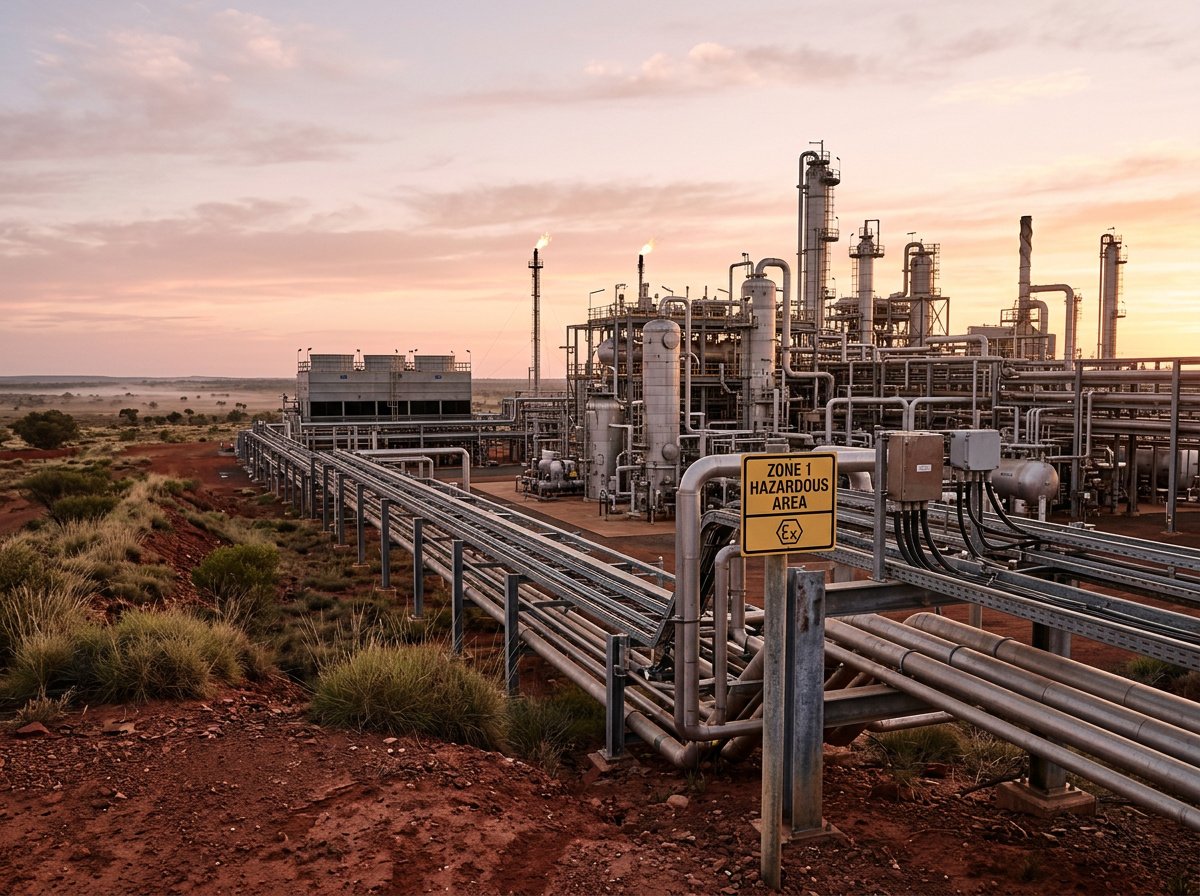
How Zone Classifications Connect to Equipment Selection
Once a site has been classified, the zone determines the Equipment Protection Level (EPL) required. This is the system that links the zone to the type of Ex equipment that can be installed. The principle is straightforward: higher-risk zones require equipment with higher levels of protection.
| Zone | EPL Required | Protection Level | Common Ex Types |
|---|---|---|---|
| Zone 0 / 20 | Ga / Da | Very high | Ex ia (intrinsic safety) |
| Zone 1 / 21 | Gb / Db | High | Ex d, Ex e, Ex p, Ex ib |
| Zone 2 / 22 | Gc / Dc | Enhanced | Ex n, Ex ic, Ex ec |
Equipment rated for a higher-risk zone can always be used in a lower-risk zone. For example, a piece of equipment rated for Zone 1 is acceptable in Zone 2. The reverse is never true. Installing Zone 2 rated equipment in a Zone 1 area is a compliance failure and a serious safety risk. This is one of the core principles covered in EEHA training, and understanding it properly is essential for any electrician working in classified hazardous areas.
Who Is Responsible for Hazardous Area Classification?
The classification of hazardous areas is not the electrician’s responsibility. Under Australian standards, the person or organisation with management or control of the installation is responsible for ensuring a proper hazardous area classification has been completed. This work must be carried out by a competent person who understands the properties of the flammable materials present, the process and equipment involved, and the relevant standards.
As an electrician, your role is to work within the classification that has been established. You need to be able to read and interpret hazardous area drawings, understand zone boundaries, identify equipment markings, and confirm that any equipment you install, maintain, or inspect is suitable for the zone it sits in. This is where the practical value of EEHA training becomes clear. The classification tells you the rules of the environment. Your training tells you how to work within those rules safely and compliantly.
Where You Encounter Zone Classifications on Site
In practice, you will see zone classifications documented on hazardous area drawings, sometimes called zone plans or area classification diagrams. These plans are typically provided as part of the site’s Hazardous Area Verification Dossier (HAVD), which is a living document that records the classification, the equipment installed, inspection results, and maintenance history.
On a typical mining, oil and gas, or processing site, you can expect to encounter a mix of zones depending on the processes involved. Fuel storage areas, pump stations, gas processing equipment, and chemical handling facilities will all have classified zones around them. The boundaries of each zone are determined by factors including ventilation, the type and quantity of flammable material, and the likelihood and rate of release. Understanding how to read these drawings and apply them to your work is a key competency assessed during your EEHA course.
Building Your Hazardous Area Knowledge
Zone classifications are the starting point, but working competently in hazardous areas requires a deeper understanding of explosion-protection techniques, equipment markings, inspection methods, and installation standards. If you are preparing for your first role in a hazardous area environment, or if you want to formalise the knowledge you have built on site, ROAR Training’s EEHA course covers all of this in a structured five-day program aligned with AS/NZS 60079 standards.
For electricians who already hold EEHA and are considering the next step in their career, the Certificate IV in Hazardous Areas adds supervisory and compliance competencies on top of the technical foundation. And if your existing EEHA training is approaching the two-to-three-year mark, a refresher course will bring you up to date with any changes to standards and keep your site access current. For more on refresher timing, see our guide on whether EEHA expires.
Frequently Asked Questions
Q: What is the difference between Zone 1 and Zone 2?
Zone 1 is an area where an explosive gas atmosphere is likely to occur occasionally during normal operations. Zone 2 is an area where an explosive atmosphere is not expected under normal conditions and would only occur briefly due to abnormal circumstances such as equipment failure. The distinction determines the minimum level of equipment protection required.
Q: Can Zone 2 rated equipment be installed in a Zone 1 area?
No. Equipment must be rated for the zone in which it is installed, or for a higher-risk zone. Zone 2 equipment does not provide sufficient protection for Zone 1 conditions. However, Zone 1 rated equipment can be used in a Zone 2 area because it exceeds the required protection level.
Q: What is the difference between gas zones and dust zones?
Gas zones (Zone 0, 1, 2) apply to areas with explosive gas or vapour atmospheres. Dust zones (Zone 20, 21, 22) apply to areas with combustible dust clouds. The numbering systems are parallel, with Zone 0 and Zone 20 representing the highest risk in each category. Different standards govern each: AS/NZS 60079.10.1 for gas, and AS/NZS 60079.10.2 for dust.
Q: Do I need to understand zone classifications to work in hazardous areas?
Yes. Understanding zone classifications is a core competency for any electrician working with electrical equipment in hazardous areas. You need to read hazardous area drawings, interpret zone boundaries, and confirm that equipment is suitable for its installed location. This is covered in detail during EEHA training.
Q: Who decides what zone an area is classified as?
The person or organisation with management or control of the installation is responsible for ensuring a hazardous area classification is completed. The classification itself must be carried out by a competent person with appropriate knowledge of the flammable materials, processes, and relevant Australian standards. Electricians work within the classification but do not typically perform the classification itself.
Q: What is a Hazardous Area Verification Dossier?
A HAVD is a documented record of the hazardous area classification for a site, including zone drawings, equipment schedules, inspection reports, and maintenance records. It is a living document that must be maintained and updated as the site changes. Electricians working in hazardous areas should be familiar with the HAVD and know how to reference it when carrying out work.