If you have spent a few years as an electrician and the work is starting to move toward substations, switchrooms and site HV networks, you have probably heard that you need “the HV ticket” before you can go near it. Fair enough. But it is not always clear what high voltage training actually covers, whether you can do it around your shifts, or whether it even applies to your job yet.
This is the plain-English version. What high voltage switching is, who needs to be authorized, who does not need it yet, and how you get qualified without taking a week off the tools.
What High Voltage Switching Actually Is
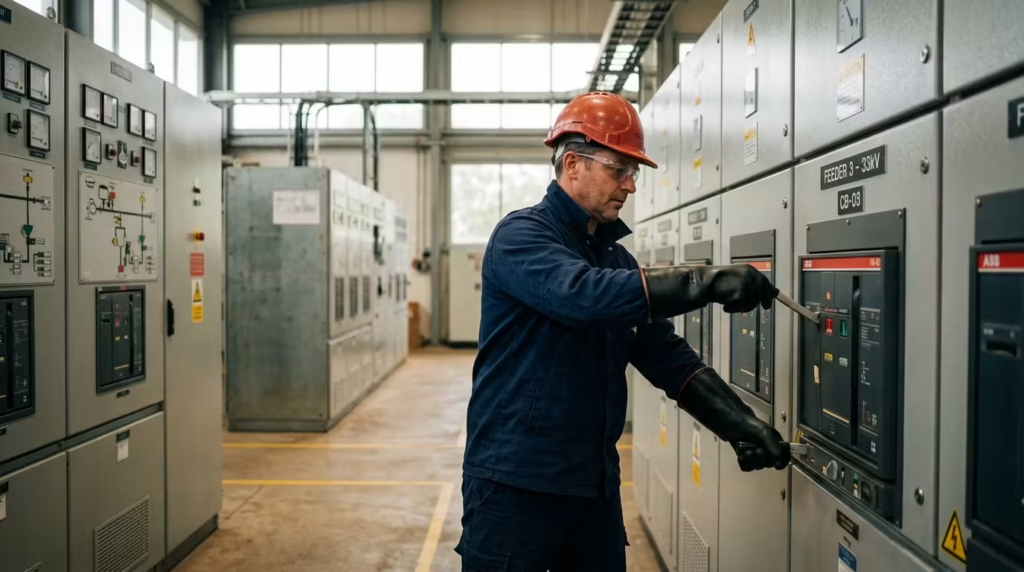
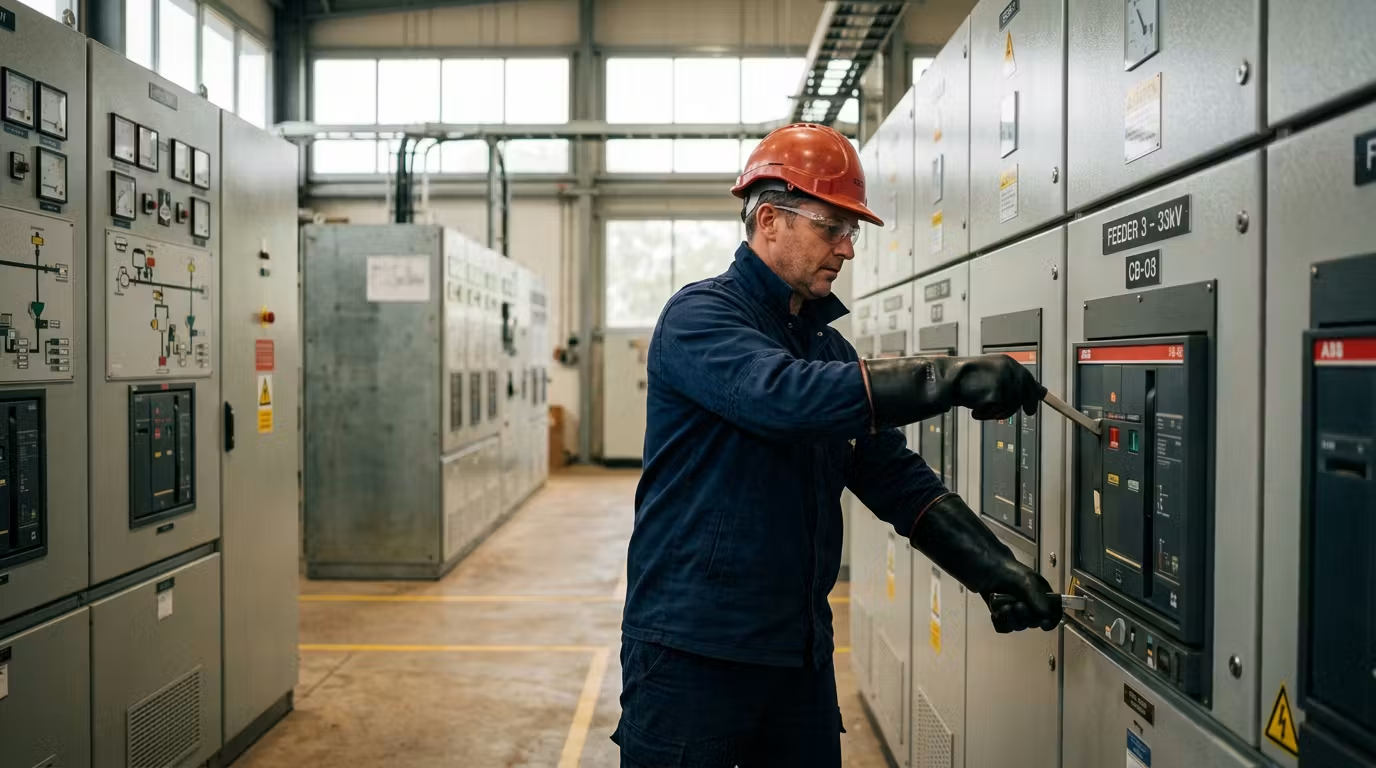
High voltage switching is the controlled, authorized operation of HV equipment: isolating it, earthing it, and switching it in and out of service so people can work on the network safely. On a mine site, in a substation or across a utility network, you cannot just open a switch because it looks right. The order it happens in matters, the permits matter, and one wrong move puts lives at risk.
That is why it sits behind a formal ticket. High voltage training teaches you to plan and carry out switching to a set program, work safely near live apparatus, and follow the permit and access-authority process that keeps everyone accounted for.
The nationally recognised course at ROAR (High Voltage (HV) Switching Operations) covers the parts that matter on the job:
- HV switching operations and procedures, and building a switching program
- Working safely in the vicinity of live electrical apparatus [UETDREL004, UETDREL005]
- Access authority and permit-to-work procedures [UEPOPS021]
- ESI safety rules and risk management
- Switchgear operation and emergency response in HV environments
There are twelve units of competency in total. The point is not the codes, it is that when you finish you can actually run switching safely and prove you are qualified to do it.
Who Needs Hv Switching Authorization
You are the person this training is for if you are:
- an electrician moving into high voltage or substation work
- a technician in utilities, substations or industrial facilities
- safety or supervisory staff overseeing HV operations
- working in mining, power generation, oil and gas or heavy industry where HV is part of the site
Basically, if your work is heading toward operating or working around energised HV apparatus, you need to be authorised before you touch it. Sites will ask for it, and they should.
Who Does Not Need It (Yet)
Just as useful to know: this is not an entry-level course, and it is not for everyone.
To enrol you need a current Unrestricted Electricians Licence (or the equivalent from another Australian state or territory). If you are still an apprentice, or you only work on low voltage and there is no HV in your near future, this ticket is ahead of where you are right now.
There is also a prerequisite: the low voltage field switching unit [UETDRIS018]. If you have already done LV switching, you are set. If you have not, do not let it stop you. You can complete that unit online with ROAR for $300 and roll straight into the HV course. And if you hold HV units from another provider, ROAR recognises them through RPL and credit transfer, so you are not paying to redo training you have already done.
How the Training Works if You Are Not a “Classroom Person”
Here is the part most tradies want to know first. You do not have to sit in a room all week.
The HV Switching Operations course is now delivered fully online and self-paced. You get up to 12 months to complete it, so you study around your roster, on nights off, on the weekend, at your own speed. Face-to-face is available for group bookings if a site wants a crew done together, but for most people the online course is the fast, flexible way through.
If school was never your thing, that is genuinely fine. The training is built for working electricians, not exam sitters, and there is real support if you get stuck on a unit. You are not left to figure it out alone.
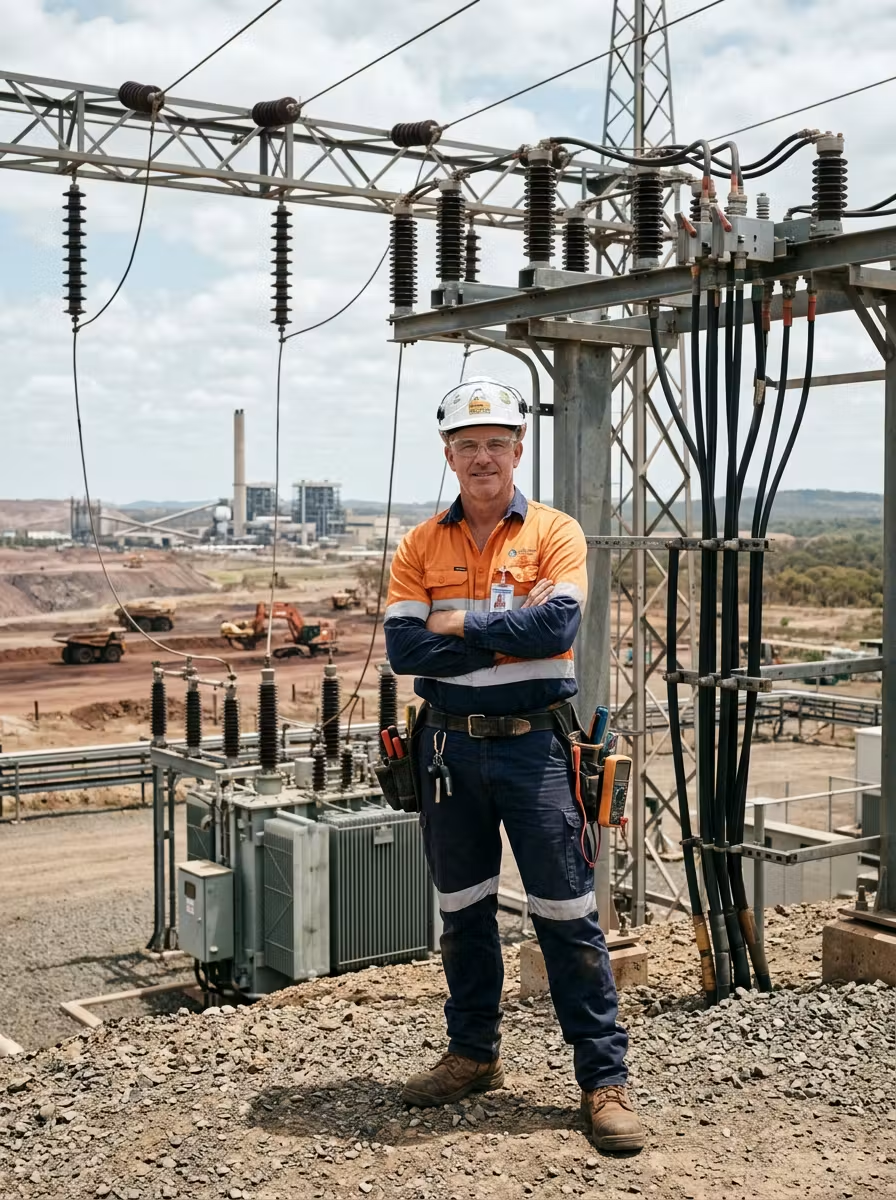
Once you are qualified, high voltage switching opens up roles like HV switching operator, substation technician, electrical supervisor, control room operator and HV maintenance technician. It is one of the tickets that moves you up.
Frequently Asked Questions
Can I really do high voltage training online? Yes. The HV Switching Operations course is delivered fully online and self-paced, with up to 12 months to finish. Group face-to-face sessions are available if a company wants to book a crew together.
How long does it take? It is self-paced, so it is up to you. You have up to 12 months, and plenty of people work through it faster around their shifts.
What do I need before I start? A current Unrestricted Electricians Licence (or Australian equivalent), plus the low voltage field switching unit [UETDRIS018] as a prerequisite. Do not have that unit? You can complete it online for $300.
I did HV units with another RTO. Do I have to start again? No. ROAR recognises qualifications and Statements of Attainment from any Australian RTO. Contact the team about credit transfer for the units you already hold.
Can I get a whole team trained at once? Yes. Group bookings are available, including face-to-face delivery. Speak to a course advisor and they will sort out the crew.
Is it nationally recognised? Yes. ROAR Training Solutions is a Registered Training Organisation (RTO 6302) and the course is nationally recognised.
Ready To Get Your HV Ticket?
If high voltage work is where you are headed, the switching authorisation is the step that gets you there. You can study it online, at your own pace, and keep working while you do.
Enrol in HV Switching Operations, or if you are booking for a crew, get in touch and a course advisor will help you set up a group booking.
Not sure it is the right course for where you are at? Have a look at Low Voltage Rescue (LVR) and CPR as well, since it is a common companion ticket for electrical workers, and reach out if you want a hand working out the right pathway.